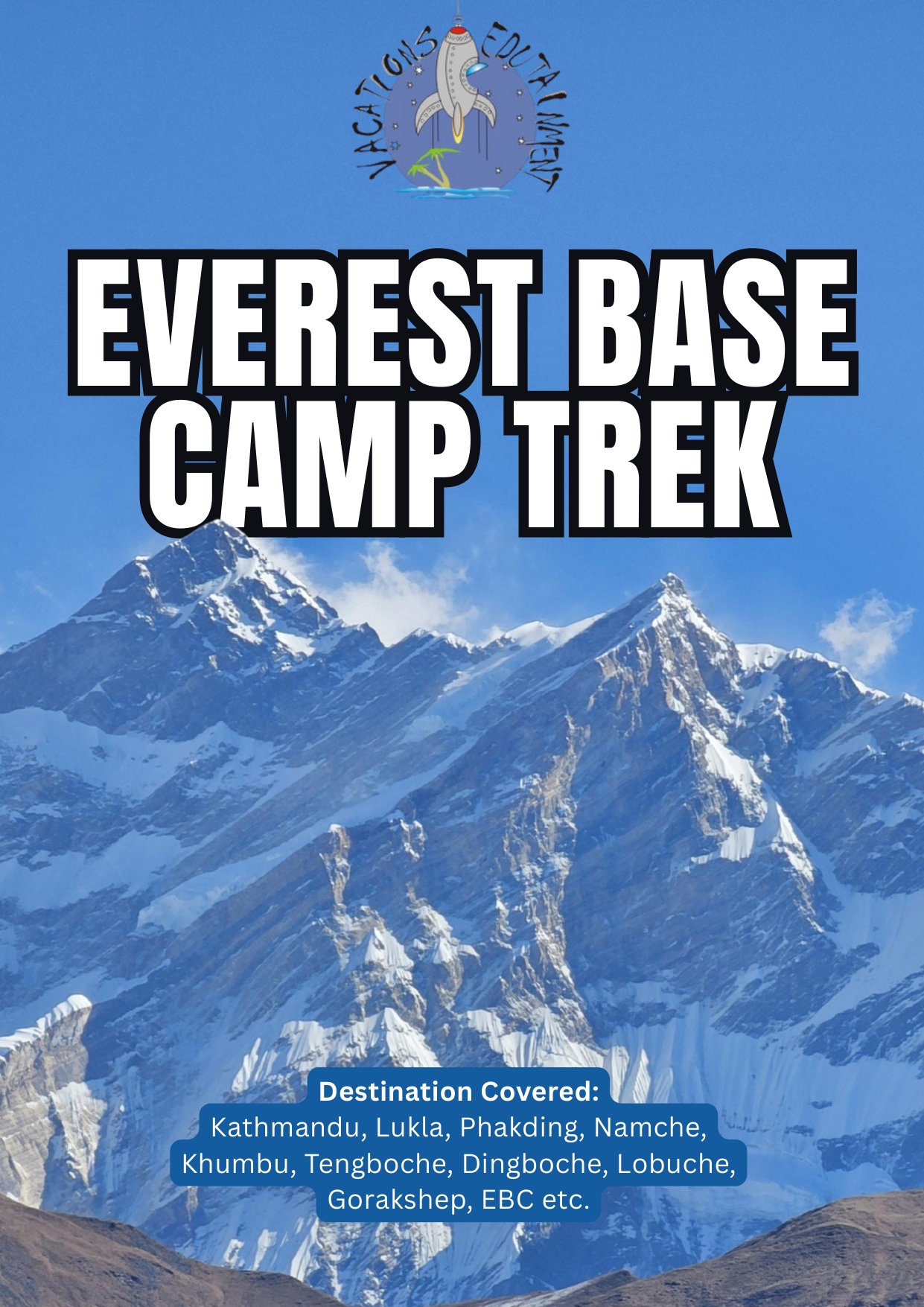
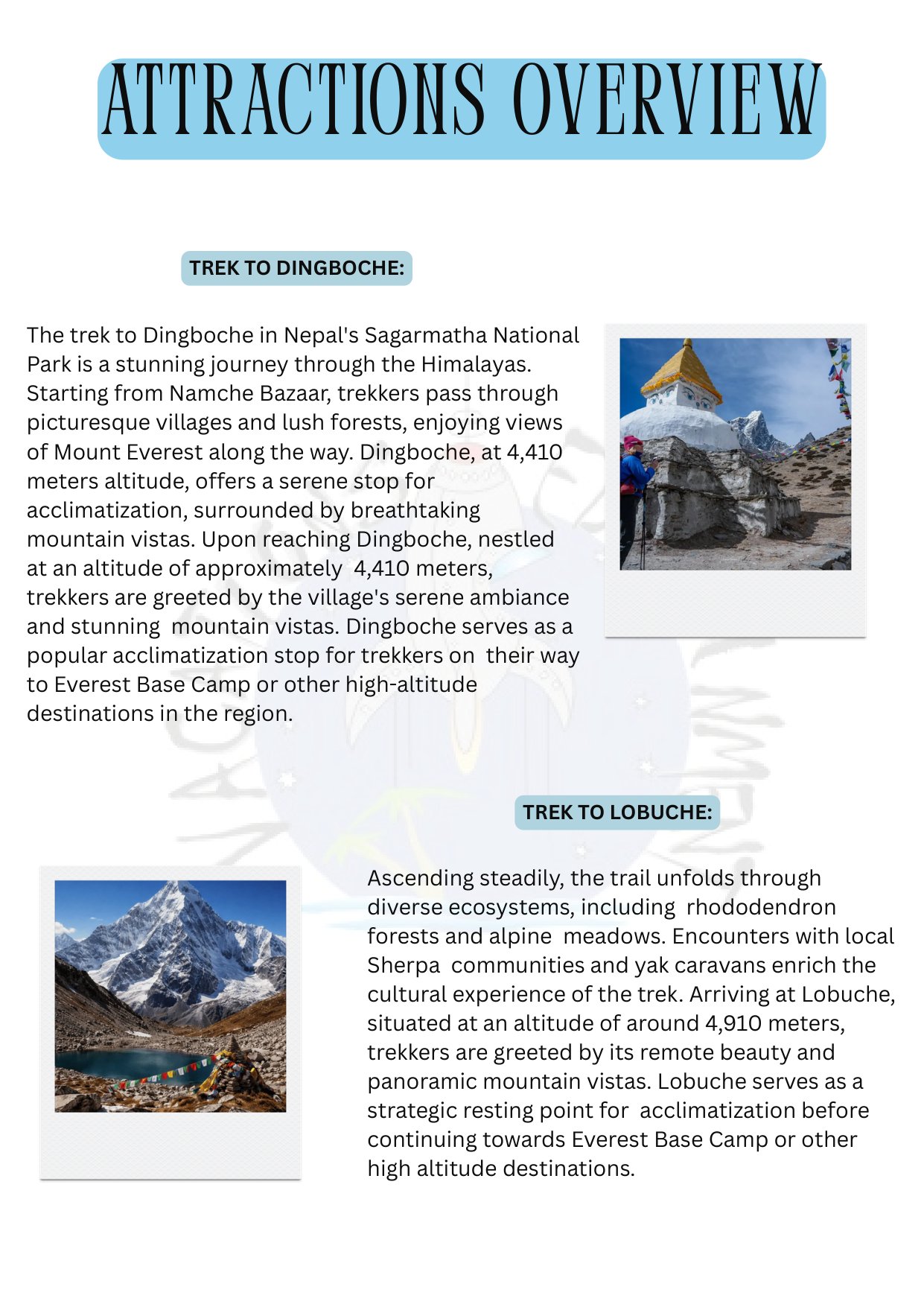
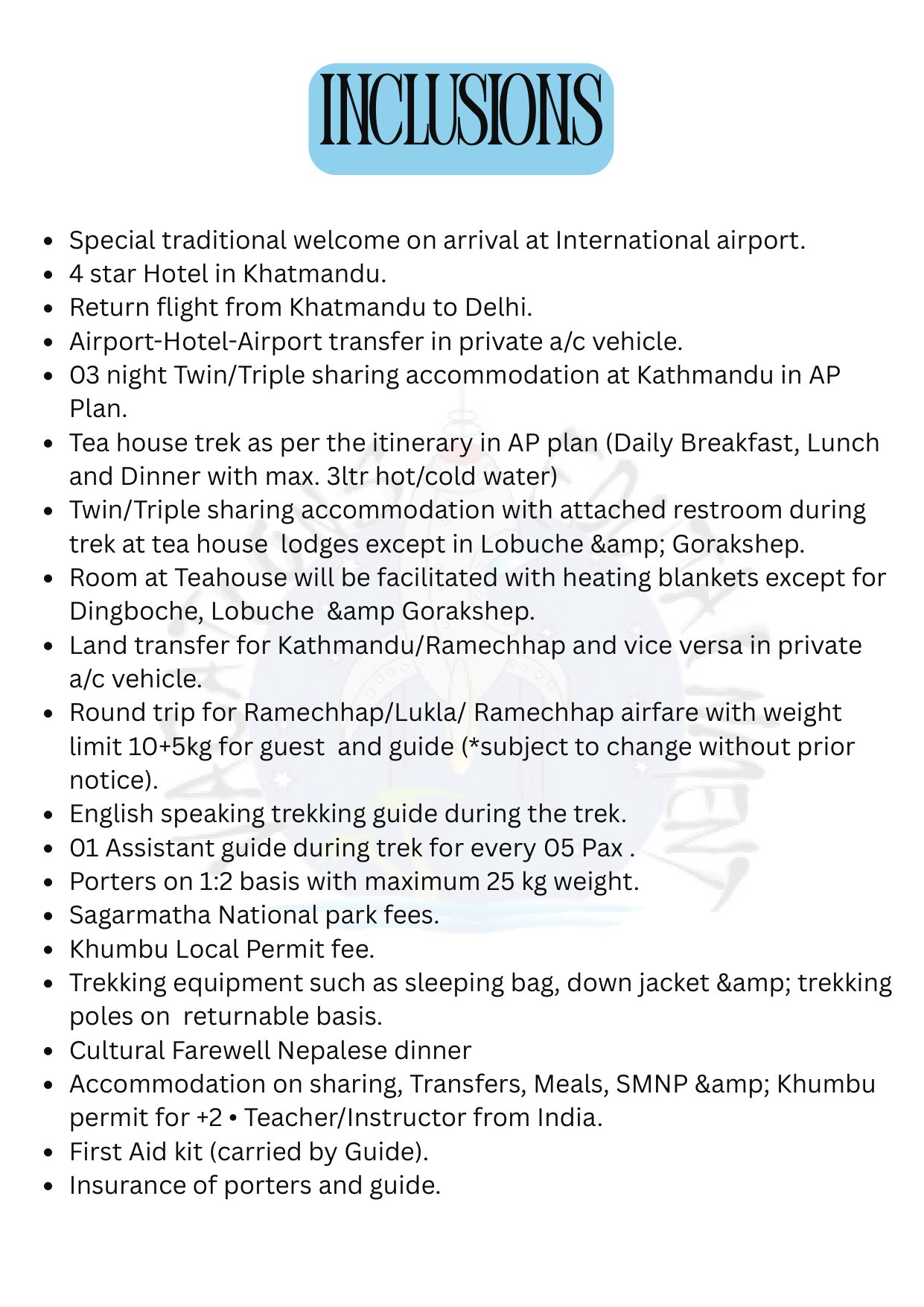
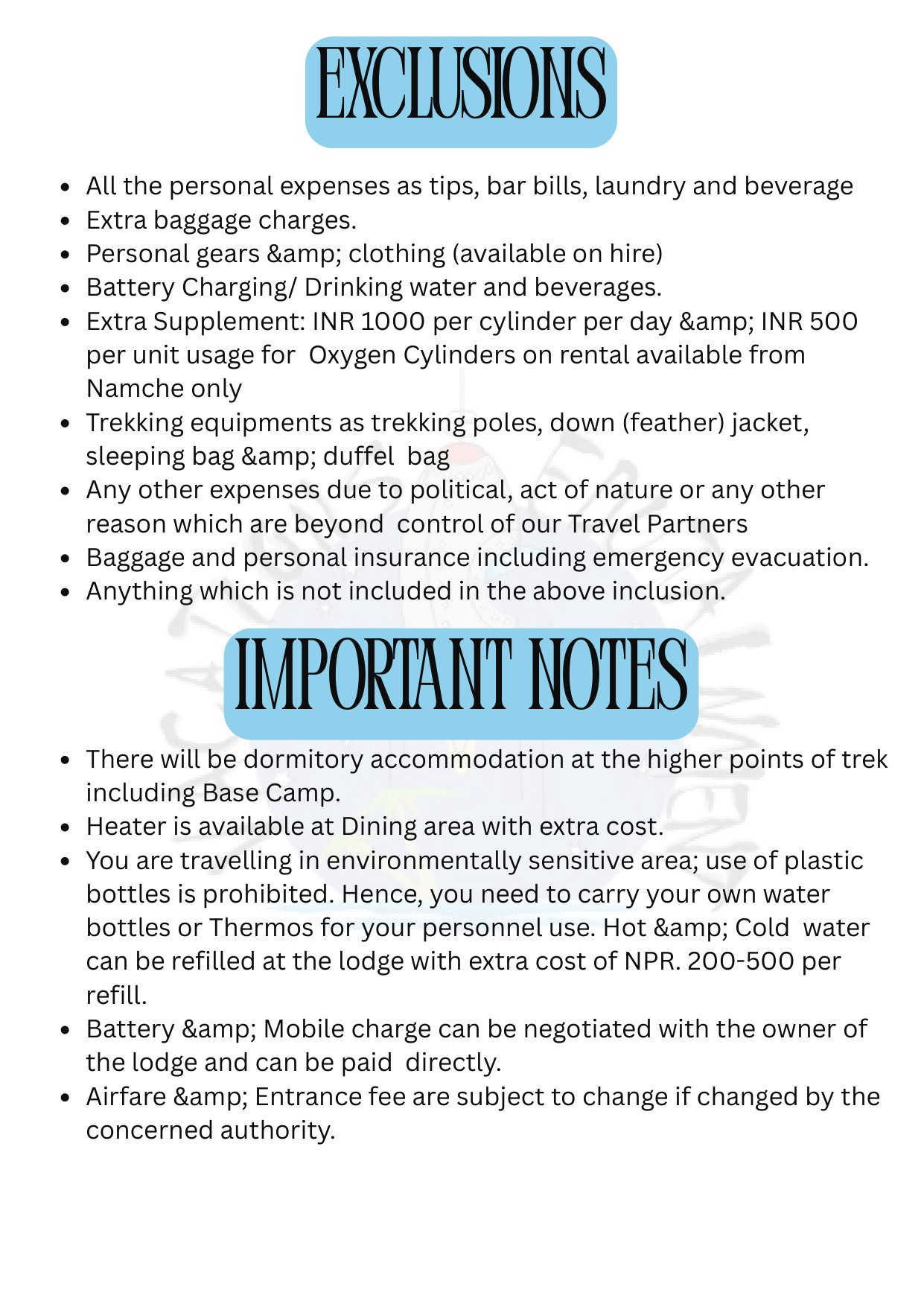
Nearly two weeks to the foot of the world’s highest mountain — through Sherpa villages, monasteries and the Khumbu.
Few journeys teach resilience, geography and cultural respect the way the Everest Base Camp trek does. Over nearly two weeks students walk the world’s most famous trail through the Khumbu region of the Nepal Himalaya — reading the landscape, adapting to altitude, and living alongside the Sherpa communities whose villages and monasteries line the route to the foot of Mount Everest.
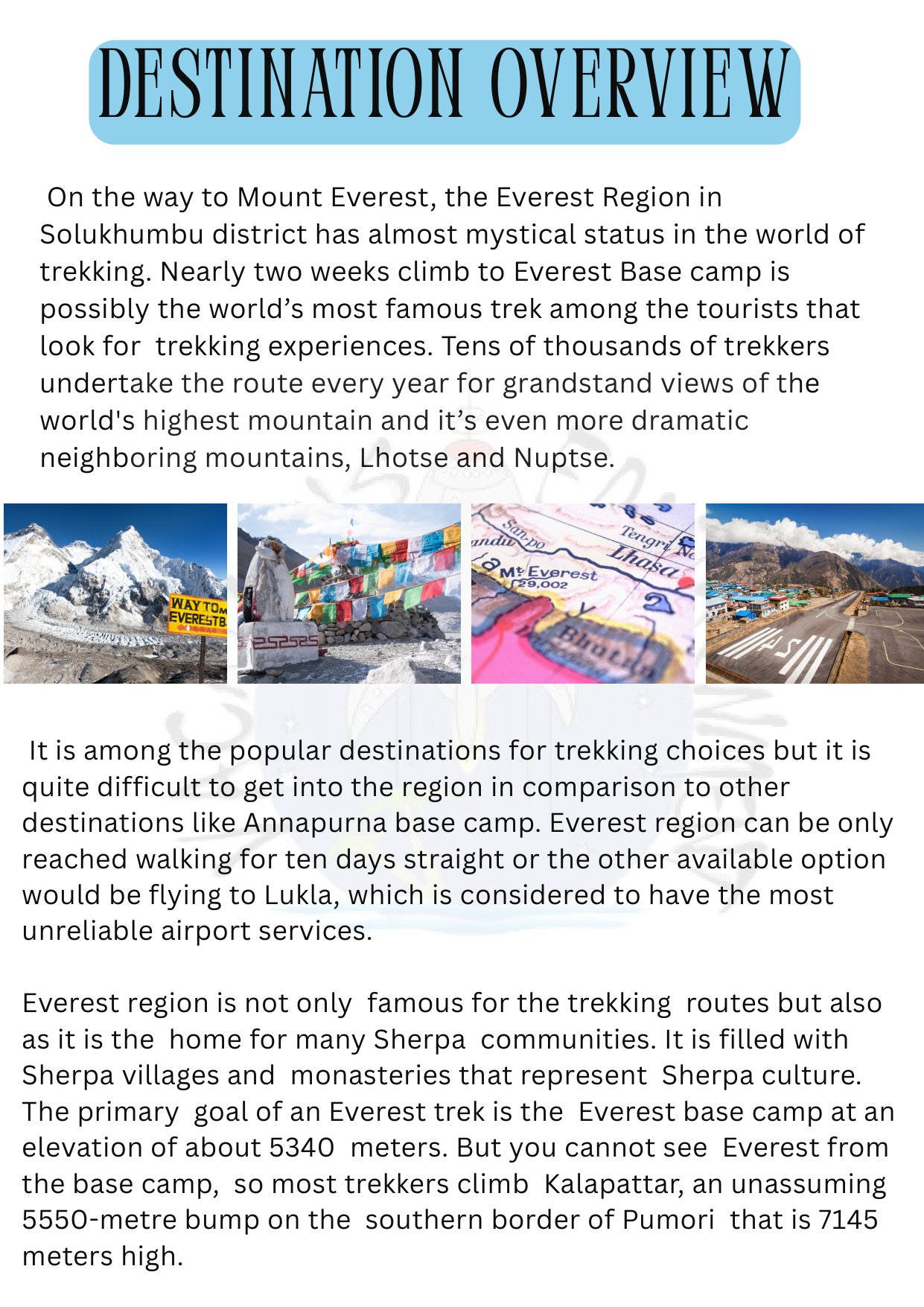
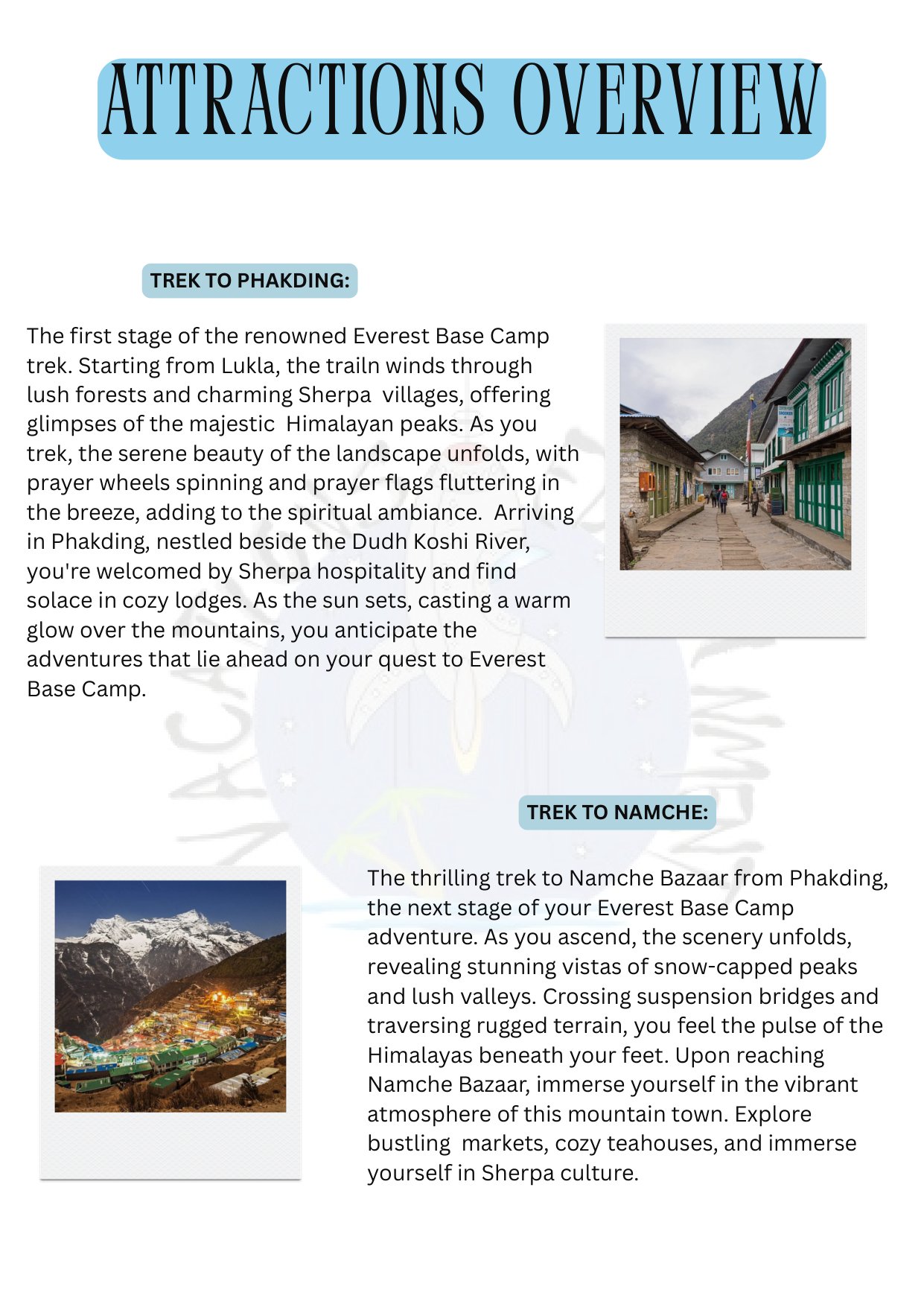
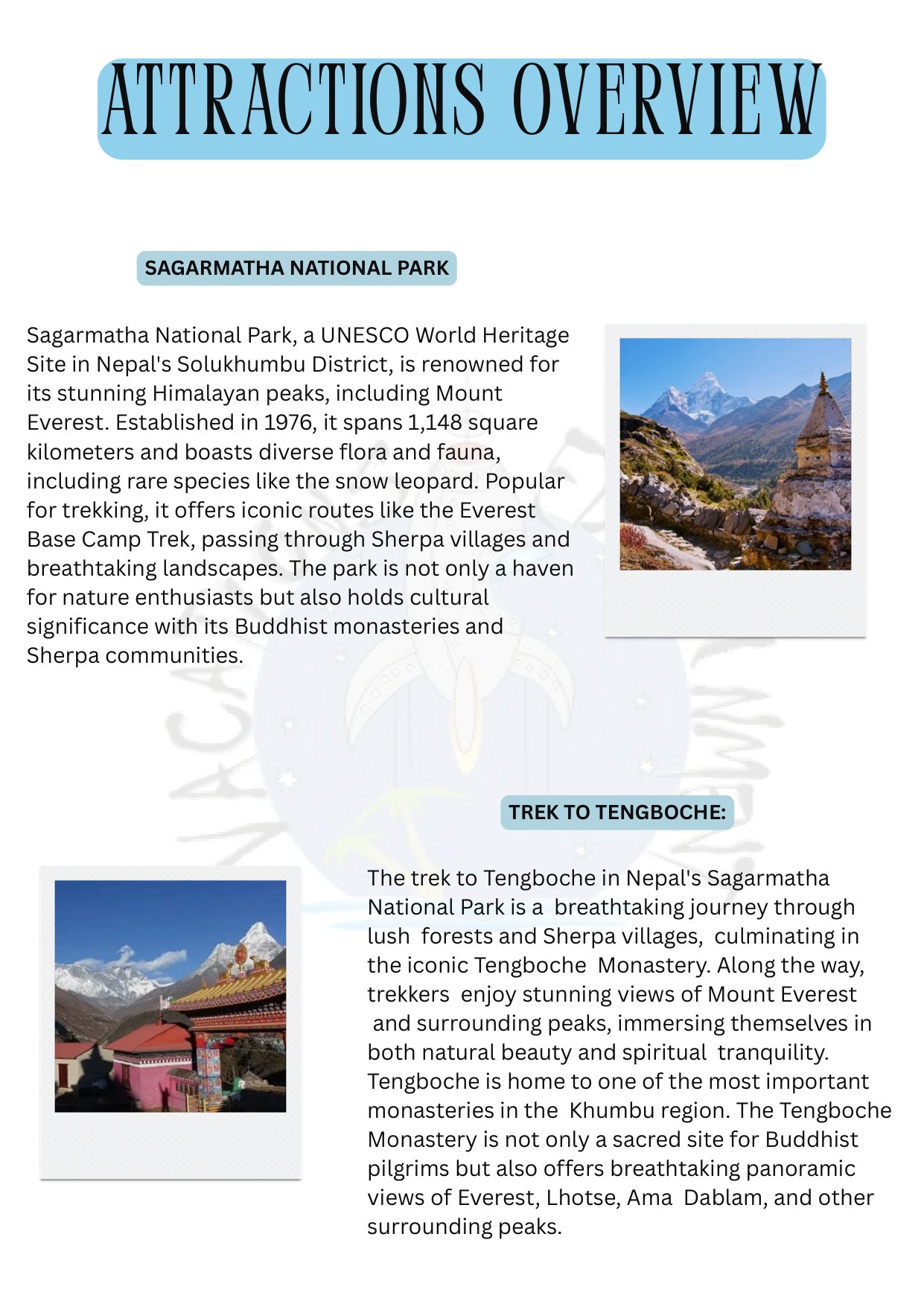
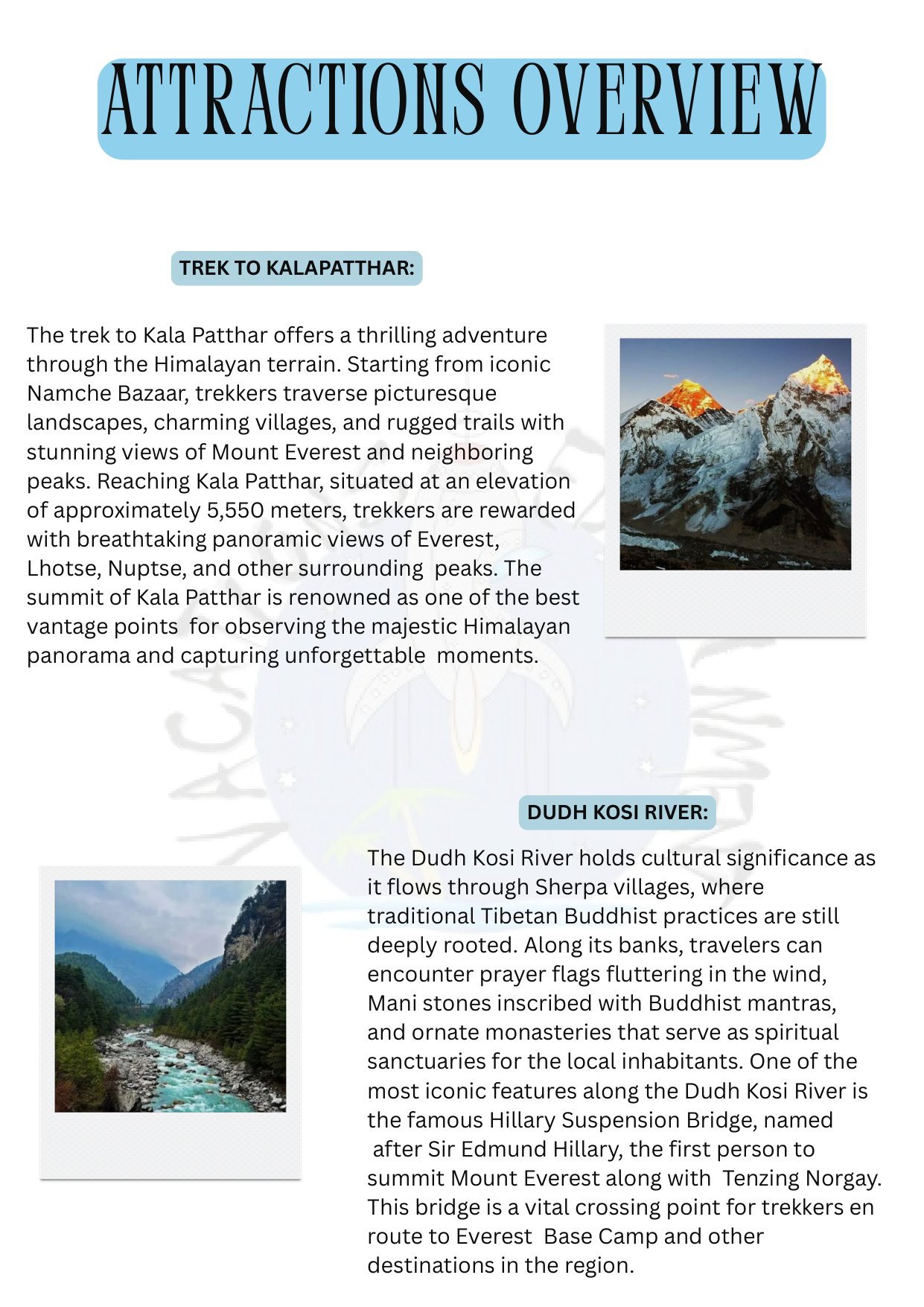
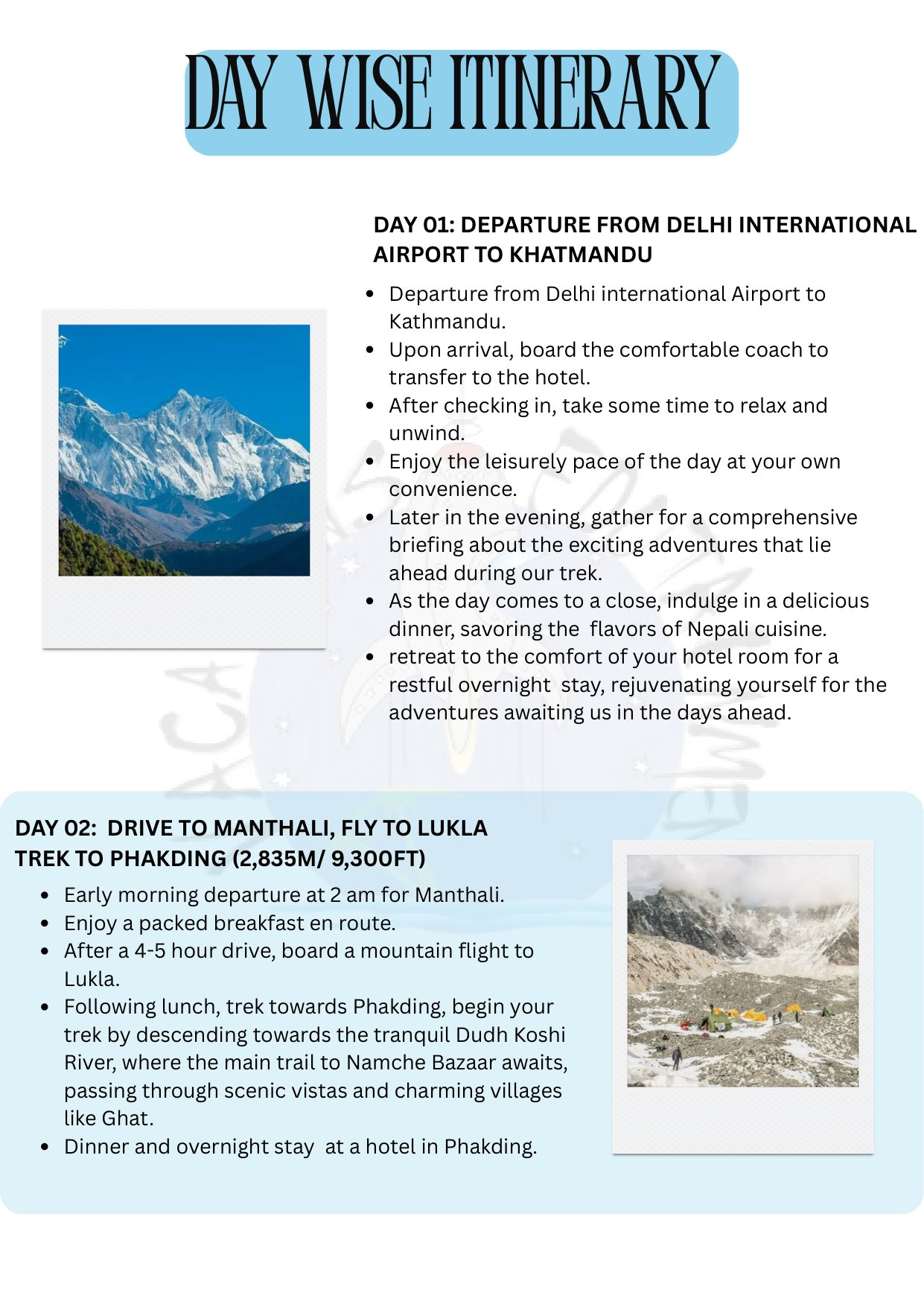
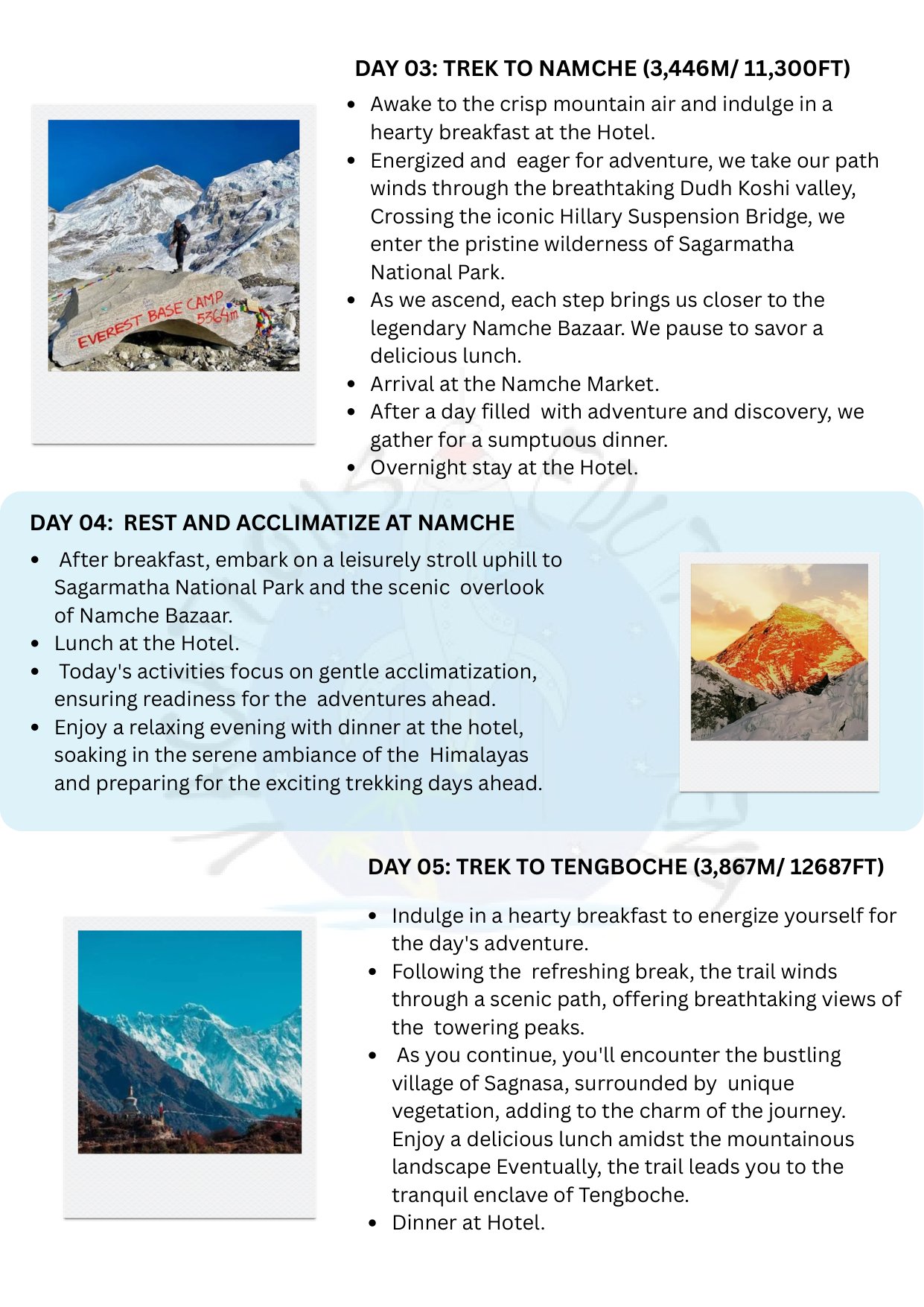
Starting with the dramatic mountain flight into Lukla, the trail follows the Dudh Koshi River across Hillary suspension bridges into Sagarmatha National Park — a UNESCO World Heritage Site. Students climb to the bustling market town of Namche Bazaar, the hilltop Tengboche Monastery, and the high villages of Dingboche and Lobuche, before reaching Everest Base Camp (5,364 m) and the sunrise viewpoint of Kala Patthar (5,545 m) for a face-to-face view of Everest, Lhotse and Nuptse.
The trek is a living lesson in physical geography, glaciology and high-altitude science — from the Khumbu Glacier to acclimatisation and the human body at altitude — alongside ecology in Sagarmatha National Park and a deep cultural immersion in Sherpa and Tibetan-Buddhist life. Above all it builds resilience, teamwork and self-belief as students achieve a genuinely challenging goal together.
Read the complete day-by-day programme below. Prefer a printable summary? Download the synopsis.
Tell us your grade, group size and dates — we’ll tailor Everest Base Camp Trek around your students.